Kaizen Fistula Care

Perianal Abscess – Stage 1 & Stage 2 Surgery

Living with a perianal abscess is no picnic. That throbbing pain near your anus, the fear of sitting down, the ongoing discomfort – it all adds up to a pathetic experience. Anorectal abscess symptoms are a painful and uncomfortable condition that can significantly impact an individual’s quality of life. The best fistula clinic in Pune, India, Kaizen Fistula Care, understands the challenges that come with an anal abscess, and in this comprehensive guide, we delve into the specifics of perianal abscess treatment, focusing on stages 1 and 2.

Dr. Samrat Jankar, a fistula Surgeon in pune explains what goes down in each stage, what to expect from the procedures, and how to ensure a smooth recovery. Our commitment to patient-centric care and continuous advancement, as meditated in the term “Kaizen,” assures that you receive the most up-to-date and effective solutions for addressing an anorectal abscess.

What is a Perianal Abscess?

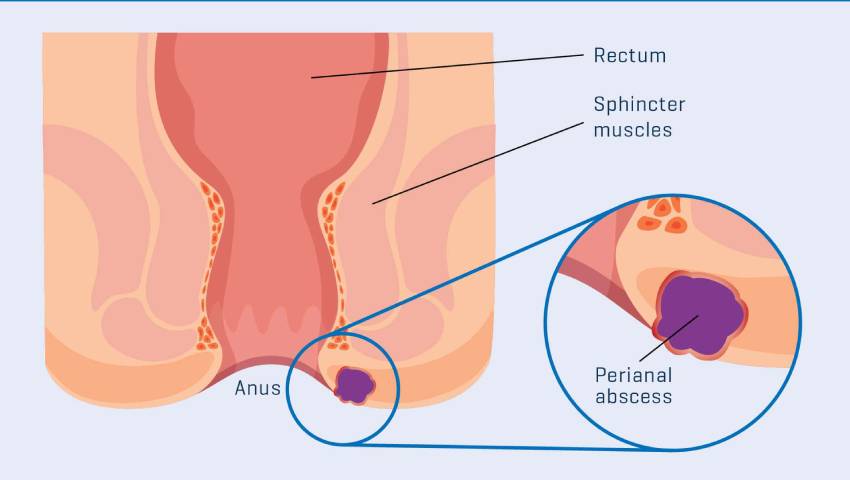
Imagine a pocket of pus forming near your anus. That’s essentially a perianal abscess. It forms when hair follicles or sebaceous glands become infected, which are the primary perianal abscess causes, leading to pus build-up. The result? Intense perianal abscess symptoms like pain, swelling, redness, and sometimes fever.

While unpleasant, the good news is, that it’s treatable, and in most cases, surgery offers an ideal solution. However, many patients initially search for perianal abscess treatment without surgery during the very early phases. With different stages of perianal abscess come different surgical approaches. Let’s break down the world of surgery for Stage 1 and Stage 2, so you can navigate this situation with confidence. Referencing perianal abscess pictures can often help patients understand the physical changes occurring in the area.

Understanding stages of perianal abscess:

The progression of the infection is generally divided into two main clinical phases. Understanding these perianal abscess stages is vital for deciding the urgency of care.

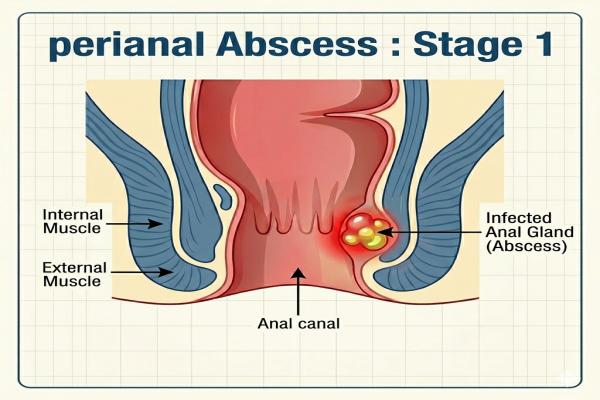
Stage 1: Early Formation (The Starting Stage)

  • The perianal abscess starting stage is characterized by a small, localized infection. At this point, the pus is just starting to form within a blocked anal gland.
  • You might experience mild pain, localized swelling, and redness around the anus.
  • The infection is “superficial,” meaning it hasn’t yet tunneled deep into the sphincter muscles or adjacent tissue.
Stage 1 perianal abscess showing early infection and localized swelling – perianal abscess healing stages pictures.

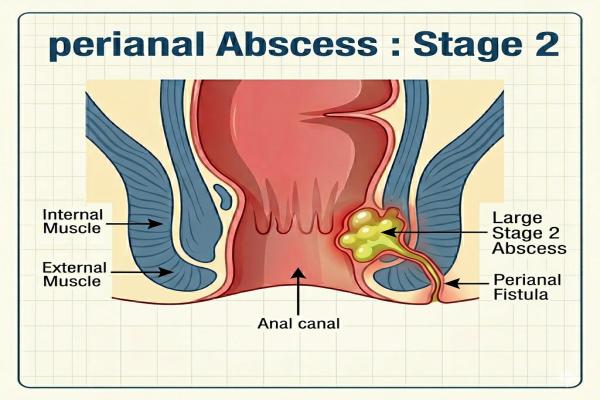
Stage 2: Advanced Progression (The Complication Stage)

  • In Stage 2, the abscess is larger, more inflamed, and causing significant distress.
  • Symptoms can include severe throbbing pain, high fever, chills, and difficulty sitting or defecating.
  • The infection is aggressive. There is a high risk that the pus will seek an exit path, leading to the formation of a Anal fistula (a tunnel between the anal canal and the skin).
Stage 2 perianal abscess pictures showing advanced inflammation and deep tissue infection.

Treating Stage 1:

In some cases, a Stage 1 abscess might resolve on its own with warm sitz baths, pain medication, stool softeners, and antibiotics. However, if it worsens or shows no signs of improvement within a few days, surgery becomes the preferred option to prevent it from reaching Stage 2.

Stage 1 Surgery:

  • This is generally an outpatient procedure under local anesthesia.
  • The surgeon makes a small incision over the abscess to drain the pus.
  • The cavity is irrigated and cleaned to prevent infection.
  • The wound is left open to recover naturally or covered with a dressing.
  • Recovery is usually quick, with most patients going home the same day.

Treating Stage 2:

Stage 2 abscesses require immediate surgical intervention due to the increased risk of complications like fistulas and sepsis.

Stage 2 Surgery:

  • This may be performed under local or general anesthesia depending on the abscess’s severity.
  • The incision might be larger than in Stage 1 to remove all infected tissue.
  • In some cases, the surgeon may also recognize and manage any early fistula formation.
  • Antibiotics are often prescribed after surgery to control infection.
  • Hospitalization for a day or two might be necessary depending on the complexity of the procedure.

Here are some options:

  1. Fistulotomy: If the abscess has developed a fistula (tunnel) connecting it to the anus, a fistulotomy might be required to open and clear the fistula tract.
  2. Advancement flap: In some cases, a flap of healthy tissue is used to cover the wound and control Fistula recurrence.
  3. Seton placement: A seton, a thin surgical thread, might be placed through the fistula tract to keep it open for drainage and gradual healing.

These methods usually require general anesthesia and hospitalization for a day or two. Recovery may take longer than stage 1 due to the more complex nature of the surgery.

Tips for a Smooth Recovery:

  1. Sitz baths: These warm soaks promote healing and reduce pain.
  2. Avoid harsh activity until fully healed.
  3. Pay attention to bowel movements and report any abnormalities to Dr. Jankar.
  4. Maintain good hygiene by gently cleaning the wound with warm water and mild soap.
  5. Avoid straining during bowel movements. Stool softeners can help.
  6. Get plenty of rest and avoid strenuous workouts.
  7. Follow Dr. Samrat Jankar’s instructions carefully for medication and wound care.
  8. Drink plenty of fluids to wash out toxins.
  9. Stick to your prescription and follow-up appointments.

When to See a Doctor:

If you experience any of these symptoms, don’t wait! Seek prompt medical attention:

  1. Worsening pain, swelling, or redness
  2. Fever
  3. Foul-smelling discharge
  4. Difficulty urinating or passing stool
  5. Bleeding

Remember:

Early diagnosis and perianal abscess treatment are critical for faster recovery and minimizing complications. Discuss your specific condition with Dr. Samrat Jankar to determine the best surgical approach for your stage. Don’t hesitate to reach out to the best colorectal specialist and fistula surgeon in Pune, India, if you suspect a perianal abscess or experience any concerning symptoms after surgery.

Conclusion:

Living with a perianal abscess can be daunting, but with proper treatment and care, you can overcome it. With the specialized care offered at Kaizen Fistula Care, patients can find relief and a path to long-term healing. If you or someone you know is dealing with a perianal abscess, consider consulting our perianal abscess treatment expert team for compassionate and comprehensive care. Your journey to recovery begins with Kaizen Fistula Care.