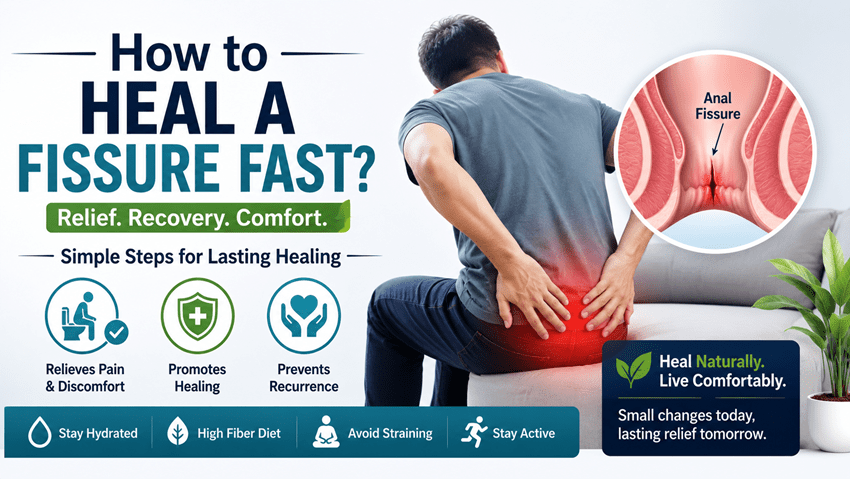
Are you feeling sharp pain every time you go to the toilet? You may be suffering from an anal fissure. Do not worry — you are not alone. Millions of people in India face this problem. The good news is that fissure treatment is possible, and many fissures heal fast with the right care.
At Kaizen Fistula Care, patients receive advanced and compassionate care for fissures and other anorectal conditions.
In this blog, Dr. Samrat Jankar, a leading fissure specialist in Pune, shares expert tips on how to heal a fissure fast, naturally, and medically.
An anal fissure (also called fissure in ano) is a small tear or cut in the skin around the anus. It can cause:
Fissures are very common. They affect people of all ages — including babies, young adults, and elderly people.
Yes — acute fissures can heal on their own with simple lifestyle changes. But chronic fissures rarely heal without medical help.
The fissure heal time depends on:
Most acute fissures heal within 4 to 8 weeks with proper home care. Chronic fissures may need procedures like Botox injection or surgery.
A sitz bath means soaking your lower body in warm (not hot) water for 10 to 20 minutes.
How to do it:
Benefits:
This is the most recommended fissure cure at home.
Most anal fissures happen because of hard stools. If you fix your constipation, you fix the root cause.
Foods to eat:
Foods to avoid:
Dr. Samrat Jankar’s Tip: Eat 25–30 grams of fibre daily and drink 8–10 glasses of water. This alone can prevent 70% of fissure cases.
Dehydration makes stools hard and painful. Drinking enough water keeps stools soft and easy to pass.
Target: Drink at least 2.5 to 3 litres of water per day.
This is one of the simplest and most effective fissure cure tips.
Your doctor may prescribe topical ointments for faster fissure healing.
Common options include:
Do not self-medicate. Always use ointments under a doctor’s guidance. The wrong cream can delay healing.
If your stools are very hard, your doctor may suggest a mild stool softener like lactulose syrup or ispaghula husk (Isabgol).
These soften the stool and reduce pressure on the fissure during bowel movements.
Use only as prescribed — not for long-term.
Straining is the biggest enemy of a healing fissure.
Tips to avoid straining:
After each bowel movement:
Keeping the fissure area clean prevents infection and helps it heal faster.
Tight synthetic underwear can cause friction and worsen the fissure.
Always wear loose, soft cotton undergarments to allow air circulation and comfort.
If you work at a desk job, take a short walk every 30–40 minutes. Sitting for long hours puts pressure on the anal area and slows fissure healing.
A donut-shaped cushion can also help reduce pressure when sitting.
Light walking (30 minutes daily) helps bowel movement and reduces constipation.
Yoga poses are helpful for fissure patients:
Avoid exercises that put strain on the anal area, like cycling or heavy weight lifting.
See a doctor immediately if:
These are signs of a chronic fissure that needs proper fissure treatment in Pune or your nearest city.
At Kaizen Fistula Care, Dr. Samrat Jankar uses the latest and most advanced techniques for fissure treatment in Pune with minimal pain and quick recovery.
“A fissure is painful, but it is very treatable. Most patients feel much better within a few weeks with the right care. Do not feel embarrassed about this condition — it is a medical problem like any other. Come and talk to us. We are here to help you heal fast and live comfortably.”
— Dr. Samrat Jankar, Fissure Specialist, Kaizen Fistula Care, Pune
Yes, mild acute fissures can heal with diet changes, sitz bath, and hydration. But if it is not better in 4–6 weeks, see a doctor.
Acute fissures heal in 4–8 weeks. Chronic fissures may take 3–4 months with treatment.
A fissure is not life-threatening, but it is very painful and affects your quality of life. Chronic fissures need proper treatment to avoid complications.
A high-fibre diet (fruits, vegetables, whole grains), plenty of water, and avoiding spicy, fried food is the best diet.
Yes, it can recur if you go back to bad diet habits or get constipated again. Maintaining a healthy diet and lifestyle prevents recurrence.
No. Many chronic fissures respond well to Botox injection, topical creams, or other non-surgical options. Surgery (LIS) is done only when other treatments fail.
© 2026 Kaizen Fistula Care All rights reserved