Kaizen Fistula Care

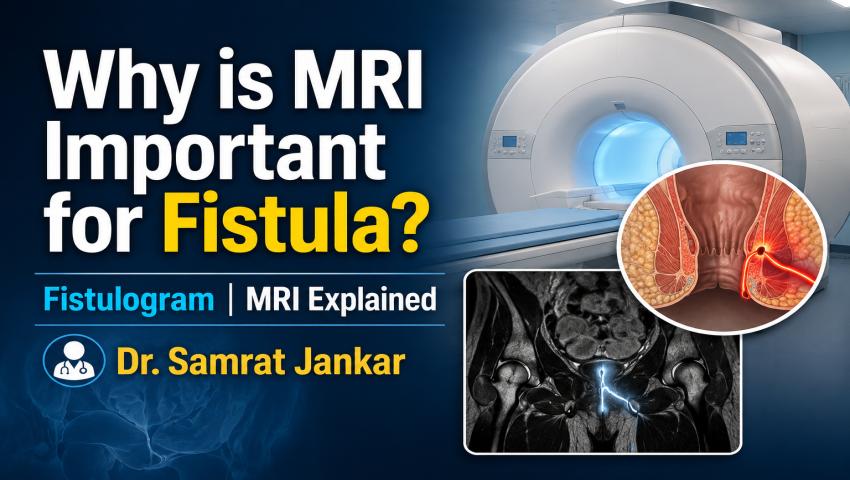
Why is MRI Important for Fistula? Fistulogram MRI Explained

Dealing with an anal fistula can be an uncomfortable and frustrating experience. If you are struggling with this painful condition, you are not alone. Getting an accurate diagnosis is the most critical step toward permanent relief. Many patients feel confused when their doctor asks for a specialized scan before starting any treatment. You might wonder why a routine physical check-up isn’t enough to get started. This patient guide explains why an MRI is the gold standard for treating this condition. We will break down how MRI fistulography works and how it protects you from treatment failure. If you are looking for long-term healing, finding the right doctor is essential. Dr. Samrat Jankar is a highly qualified, expert, reliable, and ethical fistula specialist in Pune. He has treated over 5000+ successful Anal Fistula cases with excellent recovery rates. His dedicated clinic, Kaizen Fistula Care, is an advanced Fistula Treatment center in Pune, India. Let us look at how advanced imaging makes a major difference in your recovery journey at Kaizen Fistula Care.

What Is an Anal Fistula?

An anal fistula is a small, abnormal tunnel or track. It connects an infected gland inside the anus to the outer skin around the buttocks. It usually develops after an anal abscess—which is a collection of pus—fails to heal completely.

This tunnel can cause persistent symptoms that disrupt your daily life. At Kaizen Fistula Care, advanced diagnostic tools are used first to understand this tunnel before any procedure is planned. Common signs include:

  • Constant Throbbing Pain: Sharp or aching pain around the anal area that worsens when sitting down or moving.
  • Skin Changes: Visible swelling, redness, and tenderness around the buttocks.
  • Painful Bowel Movements: Extreme discomfort or a burning sensation during and after passing stool.
  • Foul Discharge: Continuous leaking of pus, blood, or watery discharge that stains your clothes and causes skin irritation.

A fistula rarely heals on its own. Because it is a physical tunnel running through complex muscle layers, surgery is almost always required to close it safely.

Why Physical Examination Alone Cannot Detect the Full Fistula?

A clinical examination in a doctor’s clinic is always the starting point. The specialist will look at the skin around the anus to find the external opening. They may also use a finger or a small tool called a proctoscope to check inside the anal canal. However, a physical exam has major limitations. While a doctor can easily see where the tunnel ends on your skin, they cannot see the hidden paths deeper inside your body. This is why Dr. Samrat Jankar emphasizes advanced pre-operative imaging for every patient. A physical exam fails to see:

  • Complex Curves: Fistula tracks are rarely perfectly straight. They can curve, bend, or split into multiple branches like tree roots.
  • Muscle Involvement: The anal sphincter muscles control your bowel movements. A manual exam cannot show exactly how much muscle tissue the fistula passes through.
  • Blind Spots: Deep pockets of fluid or secondary tracts can sit high up in the pelvic floor, completely hidden from view.

Trying to treat a complex fistula based only on a physical exam is like driving in a strange city without a map. If a surgeon misses even a tiny branch of the tunnel during an operation, the fistula is highly likely to return.

What Is an MR Fistulogram?

An MR fistulography (also called an MRI fistulogram) is a specialized, non-invasive imaging test. It uses strong magnetic fields and radio waves to create highly detailed, 3D pictures of the soft tissues around your pelvic area. Historically, doctors used an older method called a fistulogram X-ray (or fistulography). In an X-ray fistulogram, a doctor injects a liquid contrast dye into the skin opening and takes traditional X-ray pictures. While a fistulagram X-ray is still used sometimes, it has major drawbacks. The traditional fistulogram test using X-rays has these issues:

  • Poor Soft Tissue Views: It only shows the main tunnel filled with dye and completely misses the surrounding muscle structures.
  • Incomplete Diagnostics: It fails to show hidden pockets of infection that the dye cannot reach.
  • Radiation Exposure: It requires the use of X-ray radiation, unlike a modern MRI scan.

The Modern Standard: MR Fistulography

Today, MR fistulography has largely replaced the traditional fistulogram X-ray testing methods. An MRI provides superior clarity because it maps out the skin, fat, muscles, and fluid tracks simultaneously without using harmful radiation.

During the MRI fistulography scan, you will lie comfortably on a sliding table inside a spacious MRI machine. The test takes about 30 to 45 minutes. It is completely painless, though you will hear some loud clicking sounds from the machine. The expert team at Kaizen Fistula Care uses these precise digital maps to ensure your treatment is safe and highly accurate.

Hidden Fistula Tracts: What MRI Can Reveal?

The true danger of an anal fistula lies in what is hidden beneath the skin. A high-quality MRI fistulogram serves as a powerful radar system for the surgeon. An MRI reveals critical details that are otherwise invisible during a regular clinic check-up:

  • Secondary Branches: A fistula can look like a single tunnel on the outside but branch out extensively on the inside. MRI highlights every single side-track.
  • Horseshoe Tracts: Some fistulas curve all the way around the anal canal in a semi-circle. These tracks are notoriously difficult to find without an MRI scan.
  • Deep Abscesses: The scan detects hidden pockets of trapped pus deep inside the pelvic space. If these pockets are left uncleaned, they cause severe recurring infections.
  • The Internal Opening: Finding the exact spot where the fistula starts inside the anal canal is vital for a permanent cure.

Why MRI Is Important Before Fistula Surgery?

Every patient’s anatomy is unique. An MRI gives your surgeon a personalized blueprint before you enter the operating room. This level of personalized planning is what makes Kaizen Fistula Care a highly trusted center for advanced treatments.

A pre-operative MRI answers critical questions for your medical team:

  • Exact Mapping: It shows precisely where the tunnel starts, where it travels, and where it ends.
  • Muscle Protection: It tells the doctor if the track passes through the deep sphincter muscles so they can avoid cutting them.
  • Infection Control: It reveals if there are any active hidden infections that need draining or treating first.

With these answers, the surgeon can choose the safest surgical technique for your specific case. For simple tracks, a minor layout procedure works perfectly. For complex tracks that involve significant muscle tissue, advanced techniques like laser treatments or specialized tissue flaps are used to preserve muscle function completely.

Risks of Fistula Surgery Without MRI:

Undergoing surgery without a prior MRI fistulography scan carries high risks, especially for complex or recurring cases. Experiencing advanced treatment at a specialized center like Kaizen Fistula Care helps eliminate these common complications:

  • High Recurrence Rate: If a surgeon misses a hidden branch or secondary track because they didn’t have an MRI map, the fistula will likely return.
  • Accidental Muscle Damage: Without an MRI, a surgeon might cut too deeply into the sphincter muscles because their exact position relative to the fistula was unknown.
  • Fecal Incontinence: Damage to control muscles leads to accidental leaks of gas or stool, deeply impacting your quality of life.
  • Delayed Healing: Leaving a deep, undetected abscess pocket untreated leads to prolonged pain and ongoing discharge after surgery.

When Should You Get an MRI for Fistula?

Your doctor will evaluate your symptoms to decide if you need this scan. You should generally get an MRI fistulography if you meet any of the following criteria:

  • You have a complex fistula with multiple skin openings leaking pus.
  • Your fistula has returned after a previous surgery performed elsewhere.
  • You experience severe, deep pelvic pain that suggests a hidden abscess.
  • You have a history of inflammatory bowel conditions, like Crohn’s disease.
  • You want to ensure maximum safety and reduce the risk of muscle damage during your upcoming treatment.

If you are looking for accurate guidance, consult an experienced fistula specialist in Pune. A qualified expert will analyze your symptoms and order the right scan to plan a safe, effective cure.

Conclusion:

An anal fistula is a highly treatable condition, but it requires extreme precision. An MR fistulography takes away the guesswork. It provides a crystal-clear roadmap that protects your delicate muscles and ensures the entire infection is cleared out in one go. Investing in an MRI before surgery saves you from the physical and emotional trauma of repeated, failed operations.

If you are suffering from painful discharge, swelling, or chronic discomfort, do not wait for the problem to get worse. Seek help from a reliable professional early. Schedule a consultation with Dr. Samrat Jankar, the best fistula specialist in Pune, to get an accurate diagnosis. With advanced diagnostic imaging and the expert care provided at Kaizen Fistula Care, you can put an end to the pain and reclaim your health safely.