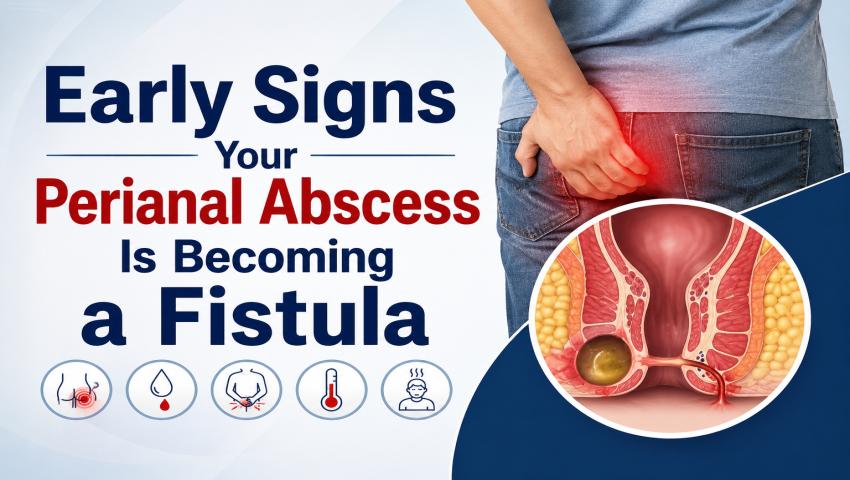
Dealing with pain, swelling, or a painful boil near the anus can be an incredibly distressing experience. Many people notice what feels like a minor perianal pimple or a small lump and hope it will go away on its own. However, these small lumps are often a type of infection known as a perianal abscess. If a perianal abscess does not heal completely, it can slowly transform into a more complex condition called a fistula in ano. Recognizing the early warning signs of this shift is critical to preventing long-term pain and complications.
If you are dealing with a painful perianal swelling or a recurring infection, getting the right medical guidance early is essential. Dr. Samrat Jankar is a highly trusted Fistula Surgeon in Pune who has completed over 5000+ successful Anal Fistula Surgeries. At Kaizen Fistula Care, patients receive advanced, compassionate, and precise Perianal Abscess Treatment to ensure the infection heals completely without turning into a long-term problem.
A perianal abscess is a painful collection of pus that develops near the anus. This infection usually begins when one of the small mucus-producing glands inside the anal canal becomes blocked. When bacteria get trapped inside the blocked gland, an infection forms and creates an abscess pocket. There are different types of perianal abscess formations depending on how deep the infection sits in the pelvic tissues. Some stay close to the skin surface, appearing like simple boils on the anus. Others can form deeper in the muscle layers or appear as an abscess on the perineum of a male or female patient.
Common symptoms of an active abscess include a constant, throbbing pain that gets worse when you sit down, move around, or pass stool. You will also feel a hard, warm, and highly tender lump in the perianal region.
Many patients wonder why a fistula happens and what causes fistula disease in the first place. The main driver behind fistula formation is an unresolved or improperly drained perianal abscess. When an abscess pocket fills up with pus, it creates intense pressure. To relieve this pressure, the pus needs a way to escape. It will either burst naturally through the skin or be drained by a surgeon during a minor procedure.
Once the pus drains out, a small tunnel can remain behind. This tunnel runs from the infected gland inside the anal canal all the way to the spot on the outer skin where the abscess burst open. This permanent, abnormal tunnel is what perianal fistula means.
Medical studies show that nearly 50% of all perianal abscess cases eventually turn into a chronic anal fistula, even with proper medical care.
Even after your initial abscess has been drained and seems to heal, you might notice ongoing fluid leakage. Seeing a frequent stain of yellow pus, blood, or watery discharge on your underwear is a primary sign of a fistulous opening.
You might notice that a small boil near the anus keeps appearing in the exact same spot where your abscess was located. It may swell up, pop, drain completely, flatten out, and then start swelling all over again a few weeks later.
This pattern is one of the classic rectal fistula symptoms. Fluid builds up inside the hidden tunnel, causing throbbing pain and pressure. Once the tunnel fills up and bursts open to release the fluid, the pain disappears suddenly, only for the cycle to repeat.
If you gently press the area where the abscess was located, you might feel a firm, rope-like cord running under your skin. This hardened tissue is the actual physical wall of the fistula tunnel forming beneath the surface.
While a fresh abscess causes massive, acute swelling, a developing fistula causes a milder, lingering perianal swelling. The area around the old skin opening stays puffy, irritated, and slightly raised.
The continuous leakage of acidic pus and fluid onto the sensitive skin around your buttocks causes severe irritation. You may suffer from constant itching, redness, and painful skin chafing that does not respond to standard diaper rash creams.
Because the tunnel connects directly to the inside of your anal canal, the discharge often carries a strong, highly unpleasant fecal odor. This foul smell persists even if you maintain excellent personal hygiene and bathe multiple times a day.
As stool passes through the anal canal, it stretches the tissues and presses against the sensitive internal opening of the fistula. This can cause a sharp, stinging pain every time you use the washroom.
If fluid gets trapped inside a branch of the forming fistula tunnel, your body will try to fight off the localized infection. You may experience frequent, unexplained low-grade fevers accompanied by mild body chills.
A developing fistula keeps the local pelvic muscles inflamed. You might find it uncomfortable to sit flat on hard chairs for extended periods, or you may feel a deep, nagging ache on one side of your buttocks while driving.
You should consult a medical professional the moment you notice any recurring discharge or a cycling boil near your anus. Waiting too long can make the condition much more difficult to treat. Many patients ask: is perianal fistula dangerous? While an anal fistula is generally not a life-threatening or cancerous condition, it can become dangerous if left completely untreated. An untreated fistula can develop multiple complex branches, turning a simple tunnel into a web of tracks passing through your critical sphincter muscles. It can also cause repeated, deep pelvic infections and severe abscesses that destroy healthy tissue.
When to Seek Emergency Medical Attention
You should visit an emergency room or contact your surgeon immediately if you experience:
A perianal abscess is a painful condition, but knowing that it can transform into an anal fistula helps you stay vigilant. Watching for signs like continuous pus discharge, recurring boils, and cyclic pain can help you catch a fistula in its earliest stages. Early detection makes the treatment much simpler and prevents damage to surrounding muscle tissues. If you notice any of these early warning signs, do not let embarrassment delay your recovery. Reach out to a specialized medical team that can evaluate your symptoms accurately.
Schedule an expert consultation with Dr. Samrat Jankar at Kaizen Fistula Care in Pune. Getting a professional evaluation early ensures you receive the most precise care needed to heal completely and protect your long-term digestive well-being.
© 2026 Kaizen Fistula Care All rights reserved