Kaizen Fistula Care

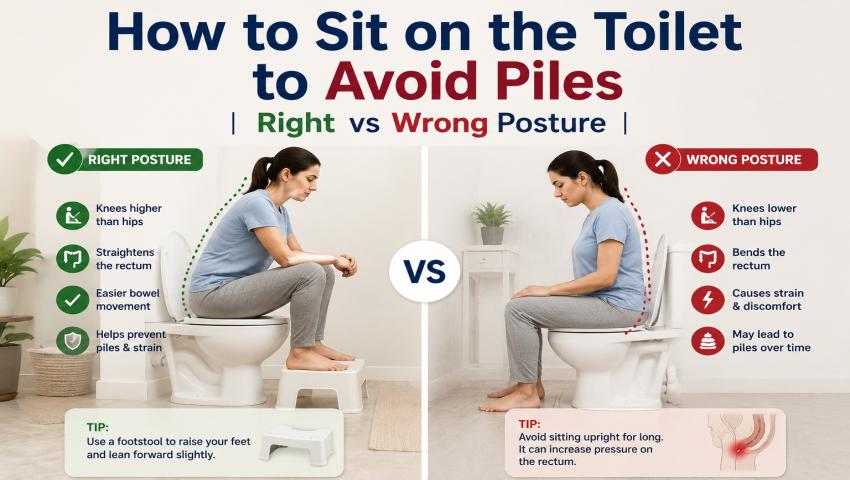
How to Sit on the Toilet to Avoid Piles? Right vs Wrong Posture

You may be sitting on the toilet wrong — and it could be causing your piles. This sounds simple. But toilet posture is one of the most overlooked reasons why piles develop. Most people never think about how they sit on the toilet. They just sit. And that wrong habit, repeated every single day, slowly causes damage.

Dr. Samrat Jankar, one of the best piles specialists in Pune and a senior colorectal surgeon at Kaizen Fistula Care, has been creating daily awareness videos on piles this month. This blog is based on his video about the right toilet sitting position to prevent and manage piles.

What Are Piles and How Do They Form?

Piles are venous cushions present in the anal region — at the back end passage. These cushions are normal. Every person has them. The problem starts when they swell due to persistent pressure. When you strain during a bowel movement, or sit on the toilet for too long, or have chronic constipation — the pressure on these cushions keeps building. Over time, they swell and enlarge. This leads to:

  • Grade 1 piles — internal swelling, no prolapse
  • Grade 2 piles — prolapse during straining, returns on its own
  • Grade 3 piles — prolapse, needs manual push back
  • Grade 4 piles — permanently prolapsed, cannot be reduced

Symptoms include bleeding during stool pass, pain while pooping, swelling around the anus, and discomfort while sitting.

The key point: Piles do not develop overnight. They form over months and years of wrong toilet habits and wrong sitting posture. This is why changing your habits early makes a big difference.

Why Toilet Posture Is a Major Cause of Piles?

Every time you sit on the toilet and strain, you are putting direct pressure on your anal cushions. Do this every day for months — and piles will form or worsen.

Here is the science behind it.

A landmark study by Stanford University proved that the squatting position is significantly better than the sitting position for healthy bowel movement. In squat position, the anorectal angle widens. Evacuation happens naturally. There is very little straining during bowel movements.

This is exactly why the Indian-style toilet is healthier than the Western-style commode. The Indian toilet forces the body into a natural squat. The pelvic floor relaxes. Stool passes easily. Straining is minimal.

With Western toilets, the body is in an upright sitting position. The anorectal angle stays acute. The pelvic floor stays tense. You have to push harder to poop. This repeated straining during bowel movements is one of the main reasons why piles come and worsen over time.

Wrong Toilet Posture — What Most People Do?

  • Sitting Upright on a Western Toilet: When you sit fully upright on a commode, your rectum and anus are not in one straight line. The anorectal angle is sharp (acute). This means stool does not flow easily. You have to strain to evacuate. This is the most common wrong posture that contributes to piles.
  • Straining and Pushing: Many people think straining is normal. It is not. If you are pushing hard to make poop come out, something is wrong. Straining during bowel movements increases pressure on veins in the anal region. This is how piles form, fissures develop, and rectal prolapse happens. Hard stools and constipation make this worse.
  • Sitting for Too Long — Using Mobile and Newspaper: This is a very common habit. Many people sit on the toilet for 15 to 20 minutes. They scroll social media, read the newspaper, chat on WhatsApp, or just sit and think.

This is very harmful.

When you sit on the toilet, your brain needs to coordinate with the spinal canal, the rectum, and the anus. This coordination sends a natural signal that allows the pelvic floor to relax and the rectum to push — without effort. When you distract yourself with a phone or newspaper, you interrupt this natural brain-gut signal. The process breaks down. You sit longer. You strain more. And that means more pressure on the anal cushions.

Right Toilet Posture — The Correct Way to Sit:

1. Squatting Position — Knees Above Hip Level

The best toilet sitting position is the squat. In this position:

  • Knees are raised above hip level — near or above chest level
  • Body leans slightly forward
  • The anorectal angle widens (becomes obtuse)
  • Rectum and anus come in a straight line
  • Pelvic floor relaxes fully
  • Stool passes easily without straining

This is what Indian-style toilets naturally provide. If you have access to an Indian toilet, use it. It is better for your bowel health.

2. Using a Toilet Footstool on a Western Toilet:

If you use a Western commode, you can still achieve a near-squat position. Place a bathroom stool or toilet footstool under your feet while sitting. This raises your knees above hip level and mimics the squatting posture. This is one of the simplest and most effective ways to reduce straining and prevent piles.

A toilet stool for adults is widely available online and in medical stores. It is a simple, affordable solution that can make a big difference.

3. Slow Deep Breathing While Sitting:

While sitting in the correct posture, take a slow deep breath. Long, deep breathing helps relax the pelvic floor muscles. This makes evacuation easier and reduces the urge to strain. It is a natural, safe relaxing technique that supports healthy bowel movement.

4. Set a 5 to 7 Minute Limit:

Do not sit on the toilet for more than 5 to 7 minutes. If stool is not coming out easily in that time, do not force it. Get up. Drink water. Try again later. Sitting longer and straining harder will only worsen your piles.

What Is Mindful Defecation — And Why It Prevents Piles?

Dr. Jankar explains this very beautifully. He calls it mindful defecation or mindful motion. Mindful defecation means:

  • Sitting in the correct squatting posture
  • Keeping the mind calm and focused
  • Allowing the brain to coordinate naturally with the rectum and pelvic floor
  • Letting the pelvic floor relax on its own
  • Allowing the rectum to push without active effort
  • No distractions — no phone, no newspaper, no social media

When you do this regularly, your body finds its natural rhythm. Evacuation becomes easy. Constipation reduces. Straining stops.

This mindful habit, done daily, can significantly reduce your risk of piles, fissure, fistula, colorectal polyps, and even colorectal problems in the long term.

Quick Tips to Prevent Piles Through Better Toilet Habits:

  • Use Indian-style toilet or place a footstool under your feet on a Western commode
  • Raise your knees above your hips and lean slightly forward
  • Take slow deep breaths to relax the pelvic floor
  • No phone, no newspaper, no WhatsApp in the toilet
  • Sit for a maximum of 5 to 7 minutes — do not force
  • Never strain if stool is not coming — get up and try later
  • Treat constipation early — drink enough water, eat fibre-rich food
  • Do not ignore the urge to go — respond to it promptly
  • Exercises for constipation such as walking and yoga for bowel movement can also help

Consult Dr. Samrat Jankar — Best Piles Specialist in Pune:

If you have been suffering from piles, bleeding during stool, pain while pooping, or chronic constipation — do not ignore these signs.

Correcting your toilet posture is the first and simplest step. But if the problem has already developed, you need expert medical help.

Dr. Samrat Jankar is a leading colorectal surgeon and proctologist in Pune. He specialises in the diagnosis and treatment of piles, fissure, fistula, and other colorectal conditions. He practices at Kaizen Fistula Care Clinic, Wakad, Pune, one of Pune’s most trusted centres for colorectal care.

The right posture is the simplest — and most ignored — way to prevent piles. Start today. And if you are already suffering, change your habits AND consult a specialist.

Frequently Asked Questions About Piles and Toilet Posture:

Yes. Sitting for a long time on the toilet — especially while using a phone or reading — increases pressure on the anal cushions and disrupts the natural brain-gut coordination needed for healthy bowel movement. It is one of the common causes of piles and also worsens existing ones.

Yes. The Indian toilet naturally positions the body in a squat. This widens the anorectal angle, relaxes the pelvic floor, and allows easy stool passage without straining. Western toilets create an acute anorectal angle and require more effort. A toilet footstool can help if you only have access to a Western-style commode.

Yes, absolutely. Correcting your toilet posture when you already have piles is very important. It will reduce straining, lower pressure on the swollen cushions, and support recovery. However, existing piles should also be evaluated and treated by a colorectal surgeon. Posture correction alone may not be enough if piles are advanced.

Five to seven minutes is acceptable. If the urge is strong when you sit, evacuation should happen naturally in this time. If it is not coming, do not force it. Sitting longer will not help — it will only add more pressure and cause more damage.

The best approach is to sit in a squat-like posture with knees raised, lean slightly forward, take a slow deep breath, and relax. Do not strain. Drinking warm water before going to the toilet, doing light exercises for bowel movement, or yoga poses for bowel movement can also help trigger a natural urge.