Dealing with constant pain, swelling, or discharge near the anal region can be deeply unsettling. If you have been diagnosed with an intersphincteric fistula, you might have many questions. What does it mean? How did it happen? Is it curable?
If you are looking for advanced care, Kaizen Fistula Care is a premier fistula treatment center in Pune, India. The clinic specializes in diagnosing and treating all types of anal fistulas. Led by Dr. Samrat Jankar, a board-certified colorectal surgeon and highly experienced fistula specialist in Pune, the center is known for providing the highest quality fistula treatment in Pune, India. Dr. Jankar takes a holistic and compassionate approach, keeping your personal, social, and financial well-being in mind. This comprehensive guide will help you understand this medical condition, its diagnosis, and the latest treatment options.
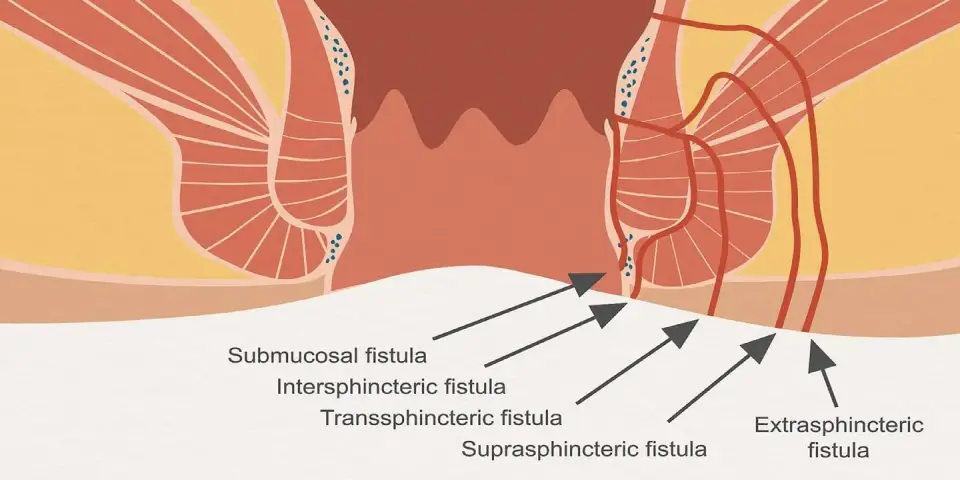
An intersphincteric fistula in ano is a specific type of anal fistula. To understand what is intersphincteric fistula, it helps to know a little bit about your anatomy. Your anal canal is surrounded by two main muscle layers that control bowel movements:
An intersphincteric perianal fistula is an abnormal tunnel or tract that forms between these two muscle layers. It usually begins at an internal opening inside the anal canal, travels down through the space between the internal and external sphincter muscles, and opens up on the skin near the anus. Among all types of anal fistulas, the intersphincteric type is the most common. It accounts for nearly 45% to 70% of all cases.
A fistula rarely goes unnoticed because it causes persistent physical discomfort. The most common symptoms include:
The primary cause of an intersphincteric fistula is an infection in the anal glands. Deep inside your anal canal, there are small glands that secrete fluid. Sometimes, these glands get blocked. A blocked gland traps bacteria, leading to an infection. This infection turns into a painful collection of pus, known as an anal abscess.
If the abscess is not treated early, or if it drains on its own, it leaves behind a hollow tunnel. This tunnel connects the infected gland inside the anal canal to the skin outside. Other less common causes include inflammatory bowel disease (like Crohn’s disease), trauma, tuberculosis, or hidden infections.
Diagnosing a fistula starts with a detailed medical history and a physical examination by a specialist.
During the clinic visit, the surgeon will gently examine the perianal skin. They look for an external opening, redness, and swelling. They may also perform a digital rectal examination (DRE). This involves using a lubricated, gloved finger to feel the inside of the anal canal to locate the internal opening or map out the tract.
While a physical exam is crucial, the internal path of a fistula can be highly unpredictable. For an accurate roadmap, doctors rely heavily on intersphincteric fistula radiology tests.
Medical imaging has revolutionized the way surgeons plan fistula treatments. An intersphincteric fistula MRI (Magnetic Resonance Imaging) is considered the gold standard for evaluation.
An MRI provides high-resolution, multi-dimensional pictures of the pelvic muscles. Here is why it is so important:
Doctors use specific classification systems to judge the severity of a fistula. The St. James’s University Hospital classification is widely used in radiology. Under this system, an intersphincteric fistula can be divided into simple and complex grades:
There are higher grades (Grade 3 to Grade 5) for fistulas that cross into deeper muscle layers, known as transsphincteric or extrasphincteric fistulas. Understanding your specific grade allows your surgeon to customize your treatment plan.
Medicines or antibiotics can temporarily reduce pain and control an infection, but they cannot cure a fistula. Surgery is the only permanent solution to close the abnormal tunnel. The primary goal of intersphincteric fistula treatment is to completely heal the tract while fully preserving the anal sphincter muscles to prevent bowel incontinence (loss of bowel control). Depending on your specific condition, your surgeon may recommend one of the following approaches:
This is a highly successful option for a grade 1 intersphincteric fistula treatment. During a fistulotomy, the surgeon cuts open the entire length of the fistula tract. This turns the tunnel into an open groove, allowing it to heal from the inside out. Because a simple intersphincteric fistula involves minimal muscle tissue, a fistulotomy can often be performed safely without risking bowel control.
If the fistula tract passes through a significant portion of the sphincter muscle, the surgeon may place a Seton. A Seton is a medical-grade thread or loop placed through the fistula tract. It stays in place for a few weeks to keep the tunnel open, allowing infection to drain out safely and creating controlled scarring before a definitive surgery is done.
This is a modern, minimally invasive technique. A flexible laser fiber is inserted into the fistula tract. The laser energy emits heat that seals the tunnel from the inside without harming the surrounding sphincter muscles. It offers less pain and a faster recovery.
For complex or deep fistulas, the ligation of intersphincteric fistula tract (LIFT) procedure is a highly effective, advanced surgical option. The LIFT procedure is designed specifically to protect your bowel control. The surgery is performed in a few clear steps:
Because the surgeon accesses the tract from the space between the muscles, the sphincter muscles are completely spared from being cut. LIFT has a very high success rate and eliminates the risk of fecal incontinence, making it a preferred choice for many patients.
Your recovery depends on the type of surgery you undergo. However, certain general recovery tips apply to almost all fistula procedures:
One of the biggest concerns for patients is recurrence. Yes, a fistula can sometimes come back after treatment. The risk of recurrence generally depends on a few factors:
Choosing an expert fistula specialist minimizes this risk significantly. Modern sphincter-saving procedures like LIFT and laser therapy have lowered recurrence rates while maintaining excellent safety profiles.
Do not ignore symptoms in the perianal region hoping they will go away on their own. You should consult a specialist immediately if you notice:
Early diagnosis leads to simpler treatment. Waiting too long can turn a simple Grade 1 fistula into a complex, branched network that is harder to treat.
If you are facing symptoms of an anal fistula, take control of your health today. Consulting an expert like Dr. Samrat Jankar at Kaizen Fistula Care in Pune will help you get an accurate diagnosis and access customized, high-quality treatment options for a pain-free, comfortable recovery.
Not usually. While symptoms may subside temporarily, the tract remains active and often leads to recurrence unless treated surgically.
Fistulotomy is the gold standard, though LIFT may be considered for higher or recurrent cases. Your doctor will choose based on your individual case.
No. Since this type of fistula only involves the internal sphincter, procedures are sphincter-sparing, and continence is preserved.
Most patients resume light activities within 3 to 5 days, and full recovery takes a few weeks.
© 2026 Kaizen Fistula Care All rights reserved