
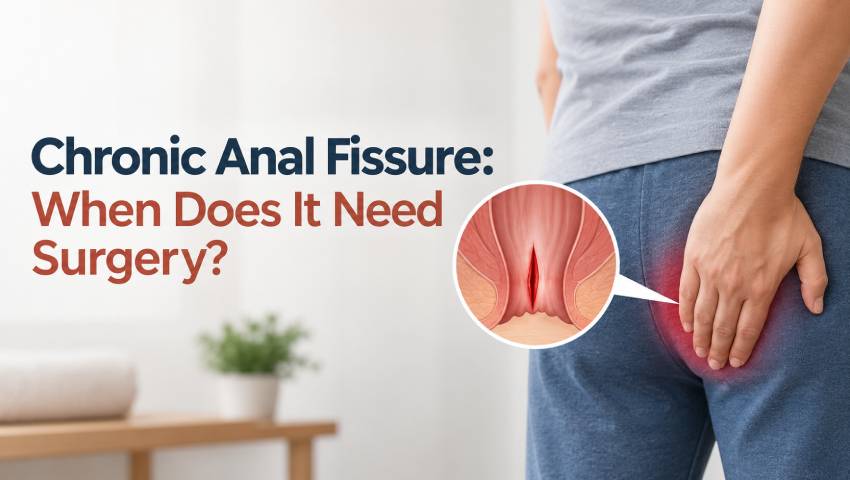
Anal fissures are very common. But many people feel shy to talk about them. Because of this shyness, they delay treatment. And delay makes the problem worse.
A fissure that does not heal in time becomes chronic. A chronic anal fissure causes ongoing pain, bleeding, and discomfort. In many cases, it needs surgery for full and permanent relief.
At Kaizen Fistula Care, Pune, we meet many patients who have suffered silently for months. Dr. Samrat Jankar, a leading Fistula Specialist in Pune, explains everything clearly in this blog. You will learn what causes chronic fissures, when surgery is needed, and what treatment options work best.
What Is a Chronic Anal Fissure?
An anal fissure is a small tear in the skin lining the anus. This area is very sensitive. Even a small tear causes sharp pain.
Most fissures happen due to trauma while passing hard stool. The skin stretches too much and tears.
A fissure is called “chronic” when it does not heal within 6 to 8 weeks. A chronic fissure looks different from a fresh one. It has raised, hardened edges. The tissue underneath is exposed. Often, a small skin tag forms near the tear. Doctors call this a “sentinel pile.” Its presence is a clear sign that the fissure has become long-standing.
How Is a Chronic Anal Fissure Different From an Acute Fissure?
Understanding the difference helps you know how serious your condition is.
Acute fissure:
- Fresh tear, usually a few days or weeks old
- Edges are soft and clean
- Heals well with diet change and ointments
- Pain is present but manageable
Chronic fissure:
- Present for more than 6 to 8 weeks
- Edges are thick, hard, and scarred
- Often has a sentinel pile or visible skin tag
- The internal sphincter muscle becomes tight and goes into spasm
- Pain is more severe and long-lasting
- Does not respond well to simple home remedies
The main reason a fissure becomes chronic is the sphincter spasm. When the muscle around the anus stays tight, blood flow to the area reduces. Less blood flow means slower healing. This creates a cycle — pain causes spasm, spasm reduces blood flow, and poor blood flow delays healing. This cycle is why chronic fissures are harder to treat than acute ones.
What Causes Chronic Anal Fissures?
Several factors lead to a fissure becoming chronic:
- Long-term constipation – Straining regularly injures the anal skin again and again
- Chronic diarrhoea – Frequent, loose motions irritate and damage the lining
- Low fibre diet and low water intake – This leads to hard stools, which are the most common cause
- Childbirth-related trauma – Vaginal delivery can sometimes cause tears that extend to the anal area
- Poor blood supply to the anal area – Some people naturally have lower blood flow in this region, which slows healing
- Untreated acute fissures – An acute fissure that is ignored, or treated incompletely, often turns chronic
- Underlying conditions – In rare cases, conditions like Crohn’s disease or infections can also cause fissures that do not heal normally
Repeated injury, without giving the tissue proper time and support to heal, is the main reason fissures become chronic. This is why early and correct treatment matters so much.
What Are the Symptoms of a Chronic Anal Fissure?
The symptoms of a chronic fissure are similar to an acute one, but they are more severe and long-lasting:
- Sharp, cutting pain during bowel movements
- Burning pain that continues for hours after passing stool
- Bright red blood on stool, tissue paper, or in the toilet bowl
- A visible tear or skin tag near the anal opening
- Itching or irritation around the anus
- Muscle spasm or tightness in the anal area
- Fear of passing stool due to pain, which can lead to further constipation
If these symptoms continue for several weeks, do not wait further. It is time to consult a Fissure Specialist in Pune for proper examination and diagnosis.
When Does an Anal Fissure Become Chronic?
An anal fissure is considered chronic when it does not heal within 6 to 8 weeks, even with basic home care and medical treatment. At this stage, the wound edges become firm and fibrous. There may be visible muscle fibres at the base of the tear. This is very different from a fresh cut, and it is unlikely to heal on its own without proper medical support.
Can a Chronic Anal Fissure Heal Without Surgery?
This is one of the most common questions patients ask us: can chronic anal fissure heal without surgery?
The honest answer is — it depends on how old and how severe the fissure is.
In earlier stages, doctors may try non-surgical options first:
- High-fibre diet – Softens stool and reduces straining
- Stool softeners – Make bowel movements easier and less painful
- Topical ointments – Medicines like nitroglycerin cream or calcium channel blockers relax the sphincter muscle and improve blood flow
- Sitz baths – Warm water soaks that relax the muscle and reduce pain
- Botox injections – In select cases, Botox is injected into the sphincter to relax it temporarily and allow healing
These methods work well for many patients, especially if started early. However, if the fissure is old, deep, has a sentinel pile, or keeps coming back again and again, non-surgical treatment often does not work fully. In such cases, surgery becomes the best treatment for chronic anal fissure.
When Is Surgery Recommended for a Chronic Anal Fissure?
Doctors usually recommend surgery when:
- The fissure has not healed even after 8 weeks of proper medical treatment
- Pain is severe and affects daily life, work, and sleep
- The fissure keeps coming back after initial healing (this needs recurrent anal fissure treatment)
- You have a chronic anal fissure that won’t heal despite using creams, sitz baths, and diet changes
- A sentinel pile or thick scar tissue has formed
- There is visible muscle spasm that does not respond to medicines
If you are asking yourself, “when does anal fissure need surgery?” — these are the clear warning signs. At this point, it is best to consult an experienced Colorectal Surgeon in Pune rather than continue struggling with home remedies alone.
What Surgical Treatments Are Available for Anal Fissures?
There are several anal fissure treatment options available today. The right one depends on your specific case.
- Lateral Internal Sphincterotomy (LIS): This is the gold-standard surgery for chronic anal fissures worldwide. In this procedure, the surgeon makes a small, controlled cut in a part of the internal sphincter muscle. This releases the muscle spasm, improves blood flow, and allows the fissure to heal naturally. LIS has a very high anal fissure surgery success rate, often above 90 percent.
- Fissurectomy: In this procedure, the surgeon removes the damaged, scarred tissue completely. This creates a fresh wound edge, which heals better than old, fibrous tissue.
- Advancement Flap Surgery: This technique is used in complex or repeatedly recurring cases. Healthy tissue from a nearby area is used to cover the fissure, helping it heal completely.
Dr. Samrat Jankar evaluates each patient carefully before choosing the surgical approach. He uses minimally invasive techniques wherever possible, which means smaller cuts, less pain, and faster recovery.
What Happens During Anal Fissure Surgery?
Many patients feel anxious before surgery. Understanding the process can ease this worry.
Anal fissure surgery is usually a day-care procedure. This means you do not need to stay overnight in the hospital. It is done under local or spinal anaesthesia, so you will not feel pain during the procedure.
The surgeon makes a small, precise cut to relax the tight anal muscle, or removes the damaged tissue, depending on the technique chosen. The entire procedure typically takes only 15 to 30 minutes. Most patients are able to go home the very same day, after a short observation period.
How Long Does It Take to Recover From Fissure Surgery?
Anal fissure surgery recovery is usually quick compared to many other surgeries. Most patients notice pain relief within just a few days.
A general recovery timeline looks like this:
- Days 1 to 5: Mild discomfort, manageable with prescribed pain relief medicines
- Within a week: Most patients return to normal daily activities and light work
- 2 to 4 weeks: Complete healing of the surgical site
Recovery speed depends on following the doctor’s post-surgery instructions carefully — this includes diet, hygiene, and avoiding straining.
Benefits and Risks of Surgery for Chronic Anal Fissures:
It is important to understand both sides before deciding on surgery. Here is an honest look at anal fissure surgery risks and benefits.
Benefits:
- High success rate, especially with LIS
- Acts as a permanent treatment for anal fissure in most patients
- Quick relief from long-standing, chronic pain
- Short hospital stay, often just a few hours
- Minimal downtime, allowing quick return to daily life
Risks (Rare, Especially With Experienced Surgeons):
- Minor bleeding after surgery
- Temporary difficulty in controlling gas (this usually improves on its own)
- Infection, which is rare if proper hygiene and post-operative care are followed
Choosing an experienced Colorectal Surgeon in Pune, who performs these surgeries regularly, significantly reduces these risks and improves outcomes.
How Kaizen Fistula Care Treats Chronic Anal Fissures?
At Kaizen Fistula Care, Pune, every patient receives a personalised treatment plan, not a one-size-fits-all approach.
Dr. Samrat Jankar brings 17+ years of surgical experience to every case. He trained at GEM Hospital and has performed over 5,000 fistula and anorectal surgeries, along with 3,000+ laparoscopic procedures. He is also known for developing the PILTEC technique, a specialised method that has shown high success rates in complex and recurring fistula and fissure cases.
Our approach to chronic anal fissure treatment includes:
- Detailed diagnosis using modern diagnostic equipment
- Non-surgical treatment tried first, wherever it is medically suitable
- Advanced, minimally invasive surgical options when needed
- Honest, transparent discussion about anal fissure surgery risks and benefits, so you can make an informed decision
- Compassionate, ethical, and patient-focused care at every step
This combination of experience, technology, and genuine care is why patients across Pune, Wakad, Baner, Aundh, Hinjewadi, and the wider Pimpri-Chinchwad area trust Kaizen Fistula Care for chronic anal fissure treatment.
How Can You Prevent an Anal Fissure From Coming Back?
Even after successful treatment or surgery, prevention matters. Here is how you can reduce the chance of a fissure returning:
- Eat a high-fibre diet with plenty of fruits, vegetables, and whole grains
- Drink at least 8 to 10 glasses of water daily
- Avoid straining during bowel movements
- Exercise regularly to keep your digestive system active
- Do not delay or hold back the urge to pass stool
- Maintain good anal hygiene
- Follow up regularly with your doctor, especially in the first few months after treatment
Small daily habits make a big difference in preventing recurrence.
Conclusion: When Surgery May Be the Right Choice for a Chronic Anal Fissure
A chronic anal fissure that won’t heal with basic home care often needs proper surgical treatment. Delaying it further only increases your pain, discomfort, and the risk of complications.
If you have been struggling with an anal fissure not healing despite trying creams, diet changes, and other home remedies, it is time to consult a specialist rather than continue suffering.
Dr. Samrat Jankar at Kaizen Fistula Care, Pune, offers thorough evaluation and advanced surgical solutions designed for lasting relief. With his experience and patient-first approach, you can expect honest guidance and effective treatment.
Visit us at Kaizen Fistula Care, Shop no. 208/209, Oriana Crest Building, Datta Mandir Road, Wakad, Pune, or call us on 79041 39064 to book your consultation. You can also write to us at kaizenfistulacare@gmail.com or check more details on our website, www.kaizenfistulacare.org. We are open Monday to Saturday, 8 AM to 9 PM.
Book a consultation today and take the first step towards a pain-free life.
Frequently Asked Questions About Chronic Anal Fissure
An acute fissure usually heals within 4 to 6 weeks with proper care, like a high-fibre diet and prescribed ointments. If it continues beyond 8 weeks, it is considered chronic and may need more advanced medical or surgical treatment.
Some early-stage fissures may improve with diet changes and medicines alone. But most true chronic fissures, especially those with a sentinel pile or hardened edges, require medical or surgical intervention for complete healing.
If your fissure has not healed after 8 weeks of treatment, keeps recurring, or causes severe pain despite creams and diet changes, surgery is usually recommended. A proper evaluation by a Fissure Specialist in Pune will confirm this.
The surgery itself is done under anaesthesia, so you will not feel pain during the procedure. Some mild discomfort after surgery is normal, but it is well managed with prescribed pain relief medicines.
Anal fissure surgery, especially lateral internal sphincterotomy, has a high success rate, often over 90 percent, when performed by an experienced surgeon.
Most patients recover within 2 to 4 weeks. Many return to normal daily activities within just a week of the surgery.
You can visit Kaizen Fistula Care in Wakad, Pune, for complete chronic anal fissure treatment. Dr. Samrat Jankar personally examines every patient and suggests the best option, whether it is medicine or surgery. The clinic is open Monday to Saturday, from 8 AM to 9 PM, and you can call 79041 39064 to book your appointment.

Recent News

Chronic Anal Fissure: When Does It
18th September 2026
The Sandwich Approach: Combining Biofeedback and
11th September 2026
Persistent Pus Discharge Near the Anus
28th August 2026
FiLaC vs VAAFT vs LIFT –
10th August 2026
How Surgeons Map Fistula Tracts Before
5th August 2026
Multiple External Openings in Fistula: What
16th July 2026
Why Choosing the Right Fistula Surgeon
15th July 2026
Why Is Seton Placement Used in
30th June 2026
Can Diabetes Delay Fistula Healing?
26th June 2026
Can Laser Surgery Treat All Types
19th June 2026Location
Contact info
- Kaizen Gastro Care, Shop no. 208 / 209, Oriana Crest building, Datta mandir road, Opposite Costa Rica society, Wakad, Pune - 411057
- gastrosamrat@gmail.com
- 097636 35252 / 079041 39064
Fistula Cure
Quick links
© 2026 Kaizen Fistula Care All rights reserved | Website Designed by Digital Mogli LLP