Kaizen Fistula Care

Thrombosed Hemorrhoid – What Is It, Causes, and Diagnosis?

Finding a painful lump near the anus after a bowel movement can be a frightening experience. Many patients panic, wondering what happens in piles or if a sudden, hard swelling indicates something life-threatening like cancer. However, in most cases, this sudden discomfort is a thrombosed hemorrhoid.

While the pain can be intense, it is important to remember that this condition is generally not life-threatening. Understanding the causes and cures for piles is the first step toward relief. For those seeking expert care, Dr. Samrat Jankar, a renowned Surgical Gastroenterologist in Pune and the Best Gastroenterologist in Pune, provides specialized treatment. As the Director & Head of the Department of Surgical Gastroenterology at the Kaizen Gastro Care Clinic, PCMC, Pune, Dr. Samrat Jankar offers unmatched expertise. With over 15 years of experience in advanced laparoscopic and colorectal surgeries, he has successfully managed more than 5,000 cases, making him a leading Piles specialist in Pune and the go-to Piles Doctor in Pune.

What Is a Thrombosed Hemorrhoid?

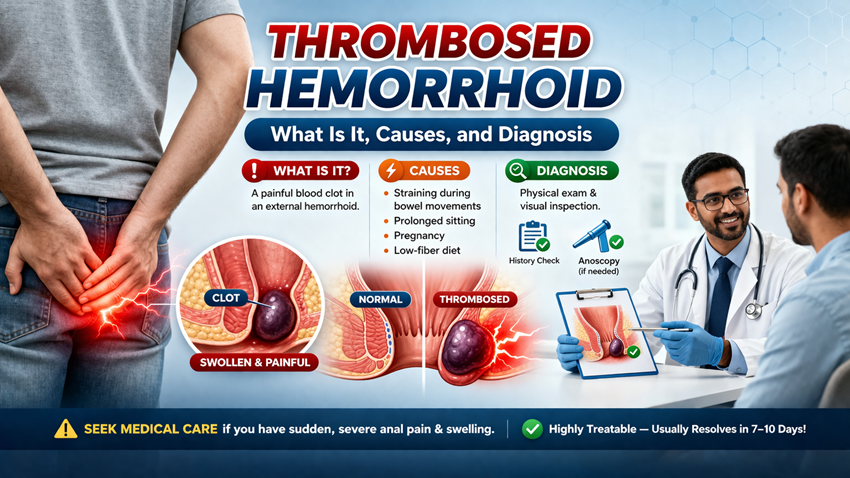
To understand a thrombosed hemorrhoid, one must first understand the hemorrhoids meaning (in Hindi, often referred to as ‘Bawaseer’ or ‘Mulavyad’ in Marathi). Hemorrhoids are swollen veins in the lower rectum and anus. A thrombosed hemorrhoid occurs specifically when a blood clot (thrombus) forms inside an external hemorrhoid.

This clot blocks the normal blood flow, leading to significant swelling and internal pressure.

Key Characteristics:

  • Sudden Appearance: A lump that wasn’t there yesterday suddenly appears after passing stool.
  • Visual Cues: You may see thrombosed hemorrhoids images online showing a bluish or dark purple lump.
  • Physical Sensation: The area is tender to the touch, and sitting becomes extremely difficult.
  • Inflammation: The surrounding tissue becomes red and angry due to the trapped clot.

Symptoms of Thrombosed Hemorrhoids:

Common symptoms of piles (haemorrhoids) when they become thrombosed include:

  • A firm, painful lump near the anus.
  • Severe pain that peaks 48 to 72 hours after the clot forms.
  • Inability to sit comfortably or walk without distress.
  • Blood with stool (hemorrhoids) or mild bleeding on the toilet paper.

Is piles dangerous? Generally, no. However, if you experience fever, chills, or pus-like discharge, it may be a perianal abscess rather than a simple pile. This requires urgent medical attention from a piles treating doctor.

Causes of Thrombosed Hemorrhoids:

Why hemorrhoids occur and turn thrombosed usually boils down to sudden, intense pressure on the anal veins. How piles cause discomfort is often linked to the following:

  • Straining During Bowel Movements: Forcing stool out can cause blood to pool and clot.
  • Chronic Constipation: Hard stools are a primary reason for piles types to flare up.
  • Prolonged Sitting: Spending too much time on the toilet increases rectal pressure.
  • Low-Fiber Diet: A lack of fiber leads to straining, which is one of the main causes and cures for piles focal points.
  • Heavy Lifting: Sudden physical exertion can trigger a clot in an existing external pile.

How Is a Thrombosed Hemorrhoid Diagnosed?

If you are wondering how to get rid of painful hemorrhoids, a professional diagnosis is vital. Dr. Samrat Jankar performs a straightforward evaluation to ensure the best outcome.

  • Medical History: The doctor will ask about the onset of pain and any history of piles/thrombosed hemorrhoid issues.
  • Physical Examination: A visual inspection helps identify the bluish swelling. Often, the doctor can feel the hard clot inside.
  • Differential Diagnosis: It is crucial to rule out other conditions like anal cancer or an abscess. A Best Colorectal Surgeon in Pune like Dr. Samrat Jankar ensures that the diagnosis is 100% accurate before starting treatment.

Treatment Options for Piles:

Many patients ask, “Can piles go away on their own?” or “Can piles go away on its own?” While small clots may eventually be reabsorbed by the body over 2–3 weeks, the pain in the meantime can be unbearable.

Non-Surgical Treatment:

  • Sitz Bath for Hemorrhoids: Sitting in warm water for 15 minutes several times a day helps reduce piles swelling.
  • Laxatives: To ensure stools stay soft so you don’t have to strain.
  • Topical Ointments: Creams to numb the pain and reduce inflammation.

Clinical Treatment:

  • Clot Evacuation: If caught within the first 48–72 hours, a doctor can perform a simple procedure to remove the clot, providing instant relief.
  • Advanced Procedures: For recurring issues, Dr. Samrat Jankar offers advanced treatment for external thrombosed hemorrhoids to ensure they do not return.

How to Prevent Piles Pain and Recurrence?

To cure piles fast and prevent them from coming back, lifestyle changes are essential:

  • Hydrate: Drink plenty of water to keep stools soft.
  • Fiber-Rich Diet: Eat fruits and vegetables to avoid the blood in stool caused by hard movements.
  • Don’t Linger: Avoid using your phone on the toilet to reduce pressure.
  • Exercise: Regular movement improves digestion.

Conclusion:

A thrombosed hemorrhoid is a painful but manageable condition. While it may feel alarming, treatment for thrombosed hemorrhoids (external) is highly effective when handled by an expert. Whether you are looking for how to stop bleeding hemorrhoids or exploring which treatment is best for piles, seeking early advice is key.

If you are suffering from a painful lump near the anus, do not suffer in silence. Consult Dr. Samrat Jankar, the Best Piles specialist in Pune, for a personalized treatment plan. Proper care can help you get rid of external piles and return to a pain-free life quickly.

Frequently Asked Questions (FAQ's):

Piles (hemorrhoids) occur when the veins in your anal canal become swollen and inflamed. While they are not typically life-threatening, a thrombosed hemorrhoid can cause extreme pain and discomfort. It is important to consult a piles treating doctor to rule out more serious conditions like infections or rare cases of anal cancer.

A Surgical Gastroenterologist or a Proctologist typically treats piles. If you notice a painful lump near the anus or experience persistent blood with stool (hemorrhoids), you should visit a specialist. Dr. Samrat Jankar is widely regarded as the best piles specialist in Pune for advanced laparoscopic and laser treatments.

The “best” treatment depends on the severity. For mild cases, lifestyle changes and a sitz bath for hemorrhoids work well. For severe or thrombosed hemorrhoids, treatment for external thrombosed hemorrhoids may involve a minor procedure to evacuate the clot or laser surgery for long-term relief.

To cure piles fast, doctors often recommend a combination of high-fiber diets, stool softeners, and topical creams. If the pain is due to a clot, a doctor can perform a quick “clot evacuation” to provide immediate relief. Following professional treatment options for piles is the most effective way to ensure they don’t return.

Small piles can sometimes shrink on their own with proper diet and hydration. However, can piles go away on their own if they are thrombosed? While the clot might eventually be reabsorbed over several weeks, the pain is usually too severe to wait, and medical intervention is often required to reduce piles swelling.

Yes, piles can cause blood in stool, usually appearing as bright red streaks on the tissue or in the bowl. While common, you should never assume all bleeding is just piles. It is vital to ask a doctor how to stop piles bleeding to ensure the blood isn’t coming from a different source higher up in the colon.

The best way to prevent piles pain is to avoid straining. You can achieve this by increasing fiber intake, drinking 3–4 liters of water daily, and not sitting on the toilet for long periods. If you already have symptoms, a warm sitz bath for hemorrhoids can soothe the area before and after movements.